Straight Talk
The rise and fall of Tarique Rahman
Zafar Sobhan
"Khaleda Zia is our leader
Ziaur Rahman is our philosophy
Tarique Rahman is our future"
This particular gem that has been ubiquitous on walls in the capital Dhaka for the past five years encapsulates perfectly the cult of personality that had been created around the person of Tarique Rahman and gave us a strong indication of where Bangladesh was heading had the January 22 election been permitted to go forward as scheduled.Had the one-sided election been consummated, we would have been looking down the barrel of the Tarique Rahman raj. The last five years he has grown steadily in power and influence as the joint secretary general of the ruling BNP, recently promoted to "senior" joint secretary general, lest there remain any confusion as to who really ran the party, and, by default, the country.
Tarique Rahman's rise and consolidation of power has been a stealthy and, in many ways, ingenious process. The cult of personality which was skillfully developed despite his lack of any discernible charisma or acuity or any of the other qualities one would expect to see in a leader (in this he is not unique, see e.g., Bush, George W.) was just one part of the process.
In these days of rent-a-crowds, stage-managed public appearances, and embedded journalism it is not difficult to create an aura of leadership and popularity around a presentable-looking young man, especially if he happens to be the eldest son of a respected ex-president and freedom fighter, especially in a country where, regrettably, too many people are all too happy to ignore simple things such as truth and consistency when it comes to their political self-interest and pledging their allegiance (indeed, one could argue that the entire BNP was established on this foundational principle), especially in a country so starved of good leadership that the impressionable and opportunistic are eager to latch on to any new thing.
Hand in hand with the cult of personality went the slow-motion take-over of the party (the senior partner in the coalition ruling the country, mind you) apparatus, placing Tarique loyalists and sycophants in every nook and corner, even to the extent of squeezing out long time party-men who refused to bow down before the brash, new dispensation.
Matters came to a head last August 26, when the young Turk's of the party's national executive committee took serious exception to some of the party's senior leaders and demanded their immediate expulsion from the party for having the temerity to criticise Tarique. Ruhul Quddus Talukder Dulu, deputy minister for land and a close associate (incidentally, now also in jail) went so far as to state: "BNP means Zia Family. He or she should be expelled from the party who will speak against this family."
Indeed, it was precisely this tendency that resulted in BNP founder members Dr. Badruddoza Chowdhury and then Oli Ahmed as well as a host of others being essentially forced out of the BNP and into first the BDB and then the LDP. The only reason there wasn't a more pronounced exodus was a well-founded fear of retribution and the combination of cringing sycophancy and grasping opportunism that marks Bangladeshi politics.
The hallmark of Tarique's ascendance and the closest we can come to in terms of an approximation of his vision for the country was the systematic centralisation of all crime and corruption: from the grandest of grand larcenies to the pettiest of petty larcenies, the idea was that nothing would escape the net of his influence.
Be it transporting a truck-load of vegetables from the north to Dhaka or selling those same vegetables in the market-place at Karwan Bazar, no transaction was too small to escape the attention of Tarique's coterie. The taxes or "tolls" that small traders transporters had to pay that eventually found their way to Hawa Bhaban make the NBR look like a charitable foundation.
The system in place for collection of tolls was fully computerized (though, no doubt, those computers are now to be found at the bottom of the Buriganga) and so sophisticated that one wonders whether Tarique and his coterie might not have been able to achieve something for the nation if they had had even the slightest inclination towards the common good instead of concentrating so single-mindedly on looting the country and establishing their reign of terror throughout the land.
From the power sector to the import trade, there was no corner of the economy that did not fall under his shadow and that his all-encompassing reach did not touch.
Until January 11, Tarique Rahman was the most powerful person in the country, indeed he was the most powerful behind the scenes power broker Bangladesh has ever seen. Considering that he was neither a member of parliament nor held any executive position, his reach tells us all we need to know about the sorry state of Bangladesh politics.
And had January 11 not happened, Tarique's reach would only have gotten more suffocating, his foot-print heavier. Had the four-party alliance returned to power, nothing could have stood in his way, he would have ascended from crown prince to king. Bangladesh would have been turned into a nasty police state where nothing would have moved without his consent, no dissent, no rule of law, no opposition, absolute power.
Tarique was selling himself, inside the country and out, as Bangladesh's Mahathir Mohammad, although any resemblance between the two is purely imaginary. Our foreign friends were willing to hold their nose and tolerate him, thinking, perhaps, that here was a man they could do business with and who would be ruthless enough to be able to deliver to them the wealth he did not loot for himself. Some countries have always had a soft spot for pliable third world despots.
When the days after the first spate of arrests began to pass without his arrest, concern began to mount that he was not being taken in. No list of the criminal and corrupt would be complete without his name at the top.
On the one hand, we were told, in whispers, to wait, to be patient, the authorities were preparing an air-tight case, Mamun was singing like a canary, the noose was tightening, they would go for Tarique when the time was right.
On the other hand, we heard of army units remaining loyal to him, we heard of the authorities setting out to arrest him and then pulling back three times, we heard of desperate back-room deals to keep him and the rest of his coterie out of jail.
Everyone knew: as long as Tarique Rahman remained at large, his poisonous coterie remained alive and able, potentially, to regroup and turn things around.
Now he is in jail. Others were swept up with him in another dramatic midnight raid. Some, doubtless, deserving, but others, again, of doubtful criminality. Still, "balance" has to be maintained at all times, I suppose.
But the message has been sent. Tarique's goons who have terrorised their localities with impunity for the past five years will now run for cover. He can't protect them any more, and now that he is behind bars, the house of cards that he and his coterie built up will start to tumble.
Perhaps I am speaking too soon and he can conjure up a resurrection from his jail cell, but this seems unlikely. The authorities know how fateful a step it is putting him in jail. He hasn't been incarcerated only to be sprung on a technicality to wreak vengeance on those who put him there.
I do not know where things will go from here, for good or for bad, but the five-year stranglehold Tarique and his associates had over the country, that they considered their birthright and personal fiefdom, had to be ended. Our long national nightmare is finally over.
Zafar Sobhan is Assistant Editor, The Daily Star.
Sunday, March 11, 2007
An excellent article on Tarique Rahman


Friday, March 09, 2007
Crown prince Tarique with a crown on his head and in a royal garb!

Oops! I guess this is not the crown he wanted!
A soothing news
Thursday, March 08, 2007
Prince stripped of glory
Tuesday, March 06, 2007
Voter ID card preparation to take one year, says expert body (???)
http://www.thedailystar.net/2007/03/06/d70306011713.htm
From newagebd, I found that the expert body was headed by Professor Jamilur Reza Chowdhury and IT Specialist Mostafa Jabbar was a member of it. Can anyone tell me how they qualify to their respective posts? Isn't there anyone in Bangladesh other than a civil engineer, who wrote few programs in his student life, to lead the committee? How much expertise does he have? How does he qualify as an IT expert? What are his achievements in IT field? And since when Mostafa Jabbar became an IT Specialist? What did he do which brought him the title? Does designing an unscientific keyboard layout and having it coded by Munirul Abedin Pappana makes him an IT Specialist? I am a graduate of computer science and doing graduate studies at this moment. If I come up with an arbitrary Bengali keyboard layout tomorrow, shouldn't I get a seat in that committee? I am sick of these people. How long will we drain millions of dollars for these ignorant people? How long will they have pleasure trip to the west by poor people's money in the name of observing their systems? Isn't there anyone in the current government to get rid of these people from this committee of vital national interest?
Saturday, March 03, 2007
ID card: Where do we stand?
Monday, February 26, 2007
New poll: When do you want the next election to be held?
When do you want the next election to be held? (multiple selections are allowed)
* In may, as demanded by Sheikh Hasina
* Within this year
* Not before having voter ID card, no matter how long it takes
* Not before all the corrupts are sentenced to jail
* Not before it is ensured that neither BNP nor AL will come to power
* Do not want at all, want to continue with current government
Multiple selections are allowed. Please vote.
Poll result: Should Dr. Yunus join politics?
| ||||||||||||||||||
Saturday, February 24, 2007
DU students say no to Yunus as Convocation speaker!!!
Dhaka, Feb 24 (bdnews24.com )- Two top student organisations of the country-Jatiyatabadi Chhatra Dal and Bangladesh Chhatra League Saturday united in a demand that the authorities not invite Nobel laureate Dr Muhammad Yunus as speaker at the Dhaka University convocation.
The rare unity of the student fronts of the country's two arch rival political parties-the BNP and the Awami League- on the Dhaka University campus has become a reality regarding the demand.
Not only these two organisations, but also almost all other student bodies, have raised the same demand. A section of teachers and students have also taken a firm stand in favour of the demand.
They argued that the Grameen Bank chief had lost his acceptability as convocation speaker after announcing formation of a political party.
A group of teachers led by Prof AAMS Arefin Siddique, leader of the pro-Awami League Blue panel of the teachers met with the vice chancellor Prof SMA Faiz Saturday noon and requested him not to invite Prof Yunus as the convocation speaker.
Later the leaders of Chhatra Sangram Parishad led by Chhatra League and Progotishil Chhatra Jote, an alliance of pro-left student bodies, also met the vice chancellor on the same demand.
Though the Chhatra Dal leaders did not have such a formal meeting, they made a similar demand through a statement Saturday afternoon.
At 12 noon a group of students under the banner of "University Students" at a press conference at Madhu's canteen announced their rejection of Yunus as convocation speaker.
Nobel laureate Muhammad Yunus is scheduled to attend the 43rd convocation of Dhaka University on February 28 as the convocation speaker where he is also to be given honourary "Doctor of Laws" on behalf of the University.
Entangled in the debate, the fate of the 43rd convocation has become uncertain. The date of the convocation was shifted once earlier due to political instability in the country.
However, the vice chancellor Prof SMA Faiz said that this time there was no possibility of shifting the convocation date.
Former president of Dhaka University Teachers Association (DUTA) Prof AAMS Arefin Siddique emerging after meeting the vice chancellor said, "Dr Yunus wants to do politics, we congratulate him. But by announcing formation of a political party he has made his being convocation speaker controversial. If he participates as the convocation speaker, a big section of the teachers will not join the programme. For the teachers there can be no bigger protest."
He also said, "Doctor of Laws" is a honourary degree. The university authorities usually give this degree to competent persons. If he is competent he can surely accept it. But he has lost the eligibility to be "convocation speaker" by announcing formation of a political party."
Dean of the Social Science Faculty Prof Harun-ur Rashid, dean of the Biological sciences faculty Prof Anwar Hossain, former general secretary of DUTA Prof Akhteruzzaman, Prof Tofael Ahmed Chowdhury, Prof Ashrafuddin Ahmed, Prof Nazma Shahin, Prof KM Saiful Islam and assistant professor Hafizur Rahman accompanied Prof Siddique.
Leaders of Bangladesh Chhatra League-led student organisation alliance Chhatra Sangram Parishad came to meet the Vice Chancellor at 3pm. Earlier, Progressive Students Alliance leaders met the VC and made the same demand.
After the meeting, BCL president Mahmud Hasan Ripon told reporters the person who did not come to honour the language martyrs on February 21 could not be convocation speaker.
BNP student front Jatiyatabadi Chhatra Dal in a statement urged the university authorities not to invite Yunus as convocation speaker.
JCD president Azizul Bari Helal and general secretary Shafiul Bari Babu said that Yunus had become controversial by launching a political party after making objectionable remarks about political leaders of the country.
Dhaka University is a universal institution and any controversial politician could not use the institution in the interest of his party, the JCD leaders said.
VC SMA Faiz however ruled out any possibility of deferring the convocation. He said convocation will be held on time by any means.
On whether Yunus would come to the convocation, the VC did not give any answer.
"The decision of making Yunus convocation speaker was taken at the meetings of the Syndicate and the Academic Council. Only five out of 183 teachers in the Academic Council opposed the decision.
The university authorities in a statement sent to news media Saturday evening said the convocation would be held on time. Rehearsal of the convocation will be held on February 27, the statement said.
Tuesday, February 20, 2007
Falu's dreamland
 The lake is built by a government project!!! This is only possible in Bangladesh. I will not be surprised if the pets are fed by government food.
Monday, February 19, 2007
Partial list of corrupt people of Bangladesh
1. Barrister Nazmul Huda (former communications minister/BNP)
2. Salahuddin Quader Choudhury (parliamentary affairs adviser to former prime minister Khaleda Zia)
3. Mohammad Nasim (former home minister/Awami League)
4. Tariqul Islam (former minister/BNP)
5. Mirza Abbas (former minister/BNP)
6. Abul Hasnat Abdullah (AL leader)
7. Salman F Rahman (AL leader and industrialist)
8. Harris Chowdhury (political secretary to former PM/BNP)
9. Giasuddin Al Mamun (Khaleda's son Tarique Rahman's friend and business partner)
10. Dr HBM Iqbal (former AL MP)
11. Mosaddak Ali Falu (former BNP MP)
12. Engineer Mosharraf Hossain (former minister/AL)
13. Ruhul Quddus Talukder Dulu (former deputy minister/BNP)
14. Nurul Islam Babul (businessman/Jamuna Group)
15. Akhteruzzaman Chowdhury Babu (AL leader)
16. Nasiruddin Ahmed Pintu (former MP/BNP)
17. Haji Selim (former MP/AL)
18. Shamim Osman (AL leader)
19. Ahmed Akbar Sobhan (businessman/Bashundhara Group)
20. Mir Mohammad Nasiruddin (former state minister/BNP)
21. Amanullah Aman (former state minister/BNP)
22. Mofazzal Hossain Chowdhury Maya (former state minister/AL)
23. Joynal Hazari (former MP/AL)
24. Ali Asghar Loby (former MP/BNP)
25. Jahangir Kabir Nanok (Jubo League president)
26. Pankaj Debnath (Sechchhasevak League general secretary)
27. Abdul Wadud Bhuiyan (former MP/BNP)
28. Hafiz Ibrahim (former MP/BNP)
29. AHM Mostafa Kamal (Lotus Kamal) (former MP/AL)
30. Mufti Shahidul Islam (former MP/IOJ)
31. Mohiuddin Khan Alamgir (former state minister/AL)
32. Mirza Azam (Jubo League general secretary)
33. Naser Rahman (former MP/BNP)
34. Salahuddin Ahmed (former state minister/BNP)
35. Iqbal Hasan Mahmud Tuku (former state minister/BNP)
36. Ward commissioner Abdul Qaiyum
37. ANH Akhter Hossain (former bureaucrat)
38. Zahurul Haque (former NBR member)
39. Engineer Manzurul Ahsan Munshi (former MP/BNP)
40. Haji Mokbul Hossain (former MP/AL)
41. Ward commissioner Chowdhury Alam
42. Mohammad Giasuddin (former Narayanganj MP/BNP)
43. Ariful Haque Chowdhury (BNP leader)
44. Rashiduzzaman Millat (former MP/BNP)
45. Former Demra MP Salauddin Ahmed (BNP)
46. Mohiuddin Ahmed (Munshiganj) (former MP/AL)
47. Mostafa Rashid-e-Shuja (AL leader)
48. Shahjahan Chowdhury (former Jamaat-e-Islami MP)
49. BM Bakir Hossain (trade union leader)
50. Firoz Mia (trade union leader)
Now, where is the prince?? When is it coming? I am becoming restless each day not seeing him caught yet. I sincerely believe that CTG is trying to find concrete proof to link him with corruption. But why is it taking so long, specially when Giasuddin Mamun is in their custody? If they can't find significant proof in BD, I think they should investigate in Malaysia, Saudi Arab and U.K. They can start with the suitcases which he took to Saudi Arabia.
Jewels of Bangladesh

These are the jewels of Bangladesh. Recently, Anti-Corruption Commission asked them to submit their wealth report. We are proud of them!
Sunday, February 18, 2007
M Nuruzzaman: A brave man!
http://www.prothom-alo.org/index.news.details.php?nid=Mzg5Mg==
http://www.prothom-alo.org/index.news.details.php?nid=Mzg5Mw==
http://www.thedailystar.net/2007/02/18/d7021801169.htm
Monday, February 12, 2007
The poll result
Who is going to win the next general election?
| Selection | | |
| B.N.P. led alliance |  17% 17% | 5 |
| A.L. led alliance |  67% 67% | 20 |
| Other |  10% 10% | 3 |
| I don't know |  7% 7% | 2 |
 | | |
| 30 votes total | ||
Mail to professor Yunus
Dr Muhammad Yunus
HAL Mars
6/D, 66 Outer Circular Road
Moghbazar, Dhaka 1217
Fax: 88029334656
Cell: 8801713082277, 8801717760870
Email: prof.yunus@gmail.com , dryunus2006@yahoo.com
Sunday, February 11, 2007
Bangabandhu on the front page of Wikipedia
Wednesday, February 07, 2007

Saturday, February 03, 2007
Sajeeb Wazed Joy opens a blog
Tuesday, January 30, 2007
gTalk Pinless Dial
* Immediate activation on request.
* 1 minute billing increment
* No connection fees
* No maintenance fees
* No expiration date
* SPEED dial for the numbers you call frequently(up to 99)
* HOT number direct dial to most wanted number(up to 3)
* Recharge account using credit card.
* View call records online
* PINLESS dial from 6 telephone numbers
* Multi-language support
* No hidden cost
The site address is: https://www.gtalk.us/pinless/
Wednesday, January 24, 2007
Monday, January 15, 2007
Back to UTD
Wednesday, December 13, 2006
Votebangla.com
Tuesday, November 28, 2006
10 minute mail!
Sunday, November 19, 2006
It is coming at last
Saturday, November 18, 2006
Thursday, November 16, 2006
What's happening???
Sunday, November 05, 2006
A Prime Minister we should be ashamed of!
As the content of the website is continuously changing, I am pasting the report here:
| |
|
Source: http://bdnews24.com/details.php?cid=0.03&id=49814#tp49814 (may not work)
Friday, November 03, 2006
Soldiers' stress
Thursday, October 26, 2006
MuhammadYunus.org launched
Thursday, October 19, 2006
A website about scientific revelations in the holy Qur'an
Tuesday, October 17, 2006
Quadir Prize
Saturday, October 14, 2006
Dr. Muhammad Yunus: First Ever Bangladeshi Nobel Laureate!
Sunday, October 08, 2006
Corruption in Biman
Interview of Tarek Rahman
Tuesday, October 03, 2006
Unbelievable idiocy!
Saturday, September 30, 2006
One fine example
Saturday, September 23, 2006
Why Countries Like Bangladesh Remain Poor
Wednesday, September 20, 2006
CAN'T WE THINK SAME WAY FOR BANGLADESH
An article By Dr. Abdul Kalaam (PRESIDENT OF INDIA)
We have not conquered anyone. We have not grabbed their land, their culture, and their history and tried to enforce our way of life on them. Why? Because we respect the freedom of others. That is why my first vision is that of FREEDOM.
I believe that India got its first vision of this in 1857, when we started the war of independence. It is this freedom that we must protect and nurture and build on. If we are not free, no one will respect us. My second vision for India is DEVELOPMENT. For fifty years we have been a developing nation.
It is time we see ourselves as a developed nation. We are among top 5 nations of the world in terms of GDP. We have 10 percent growth rate in most Areas. Our poverty levels are falling. Our achievements are being globally recognized today. Yet we lack the self-confidence to see ourselves as a developed nation, self- reliant and self-assured. Isn't this incorrect?
I have a third vision. India must stand up to the world. Because I believe that, unless India stands up to the world, no one will respect us. Only STRENGTH respects strength. We must be strong not only as a military power but also as an economic power. Both must go hand-in-hand. My good fortune was to have worked with three great minds. Dr. Vikram Sarabhai of the Dept of space, Professor Satish Dhawan who succeeded him and Dr Brahm Prakash, father of nuclear material. I was lucky to have worked with all three of them closely and consider this the great opportunity of my life.
I see four milestones in my career: Twenty years I spent in ISRO. I was given the opportunity to be the project director for India's first Satellite launch vehicle, SLV3. The one that launched Rohini. These years played a very important role in my life of Scientist. After my ISRO years, I joined DRDO and got a chance to be the part of India's guided missile program. It was my second bliss when Agni met its mission requirements in 1994. The Dept of Atomic Energy and DRDO had this tremendous partnership in the recent nuclear tests, on May 11 and 13. This was the third bliss. The joy of participating with my team in these nuclear tests and proving to the world that India can make it, that we are no longer a developing nation but one of them. It made me feel very proud as an Indian. The fact that we have now developed for Agni a re-entry structure, for which we have developed this new material. A very light material called carbon-carbon.
One day an orthopedic surgeon from Nizam Institute of Medical Sciences visited my laboratory. He lifted the material and found it so light that he took me to his hospital and showed me his patients. There were these little girls and boys with heavy metallic calipers weighing over three Kg. each, dragging their feet around. He said to me: Please remove the pain of my patients . In three weeks, we made these Floor reaction Orthosis 300-gram calipers and took them to the orthopedic center. The children didn't believe their eyes. From dragging around a three kg. load on their legs, they could now move around. Their parents had tears in their eyes. That was my fourth bliss!
Why is the media here so negative?
Why are we in India so embarrassed to recognize our own strengths, our achievements?
We are such a great nation. We have so many amazing success stories but we refuse to acknowledge them.
Why?
We are the first in milk production.
We are number one in Remote sensing satellites.
We are the second largest producer of wheat.
We are the second largest producer of rice.
Look at Dr Sudarshan, he has transferred the tribal village into a self-sustaining, self-driving unit.
There are millions of such achievements but our media is only obsessed in the bad news and failures and disasters.
I was in Tel Aviv once and I was reading the Israeli newspaper. It was the day after a lot of attacks and bombardments and deaths had taken place. The Hamas had struck. But the front page of the newspaper had the picture of a Jewish gentleman who in five years had transformed his desert into an orchid and a granary.
It was this inspiring picture that everyone woke up to. The gory details of killings, bombardments, deaths, were inside in the newspaper, buried among other news.
In India we only read about death, sickness, terrorism, crime.
Why are we so NEGATIVE ?
Another question : Why are we, as a nation so obsessed with foreign things?
We want foreign TVs, we want foreign shirts. We want foreign technology. Why this obsession with everything imported. Do we not realize that self-respect comes with self-reliance?
I was in Hyderabad giving this lecture, when a 14 year old girl asked me for my autograph. I asked her what her goal in life is. She replied: I want to live in a developed India. For her, you and I will have to build this developed India. You must proclaim. India is not an under-developed nation; it is a highly developed nation .
Do you have 10 minutes? Allow me to come back with a vengeance.
YOU say that our government is inefficient.
YOU say that our laws are too old.
YOU say that the municipality does not pick up the garbage.
YOU say that the phones don't work, the railways are a joke,
The airline is the worst in the world, mails never reach their Destination.
YOU say that our country has been fed to the dogs and is the absolute pits.
YOU say, say and say. What do YOU do about it?
Give him a name-YOURS. Give him a face - YOURS.
YOU walk out of the airport and you are at your International best. In Singapore you don't throw cigarette butts on the roads or eat in the stores.
YOU are as proud of their Underground links as they are.
YOU pay $5 (approx Rs 60) to drive through Orchard Road (equivalent of Mahim Causeway or Pedder Road) between 5 PM and 8 PM.
YOU come back to the parking lot to punch your parking ticket if you have over stayed in a restaurant or a shopping mall irrespective of your status identity.
In Singapore you don't say anything, DO YOU?
YOU wouldn't dare to eat in public during Ramadan, in Dubai.
YOU would not dare to go out without your head covered in Jeddah.
YOU would not dare to buy an employee of the telephone exchange in London at 10 pounds (Rs 650) a month to, "see to it that my STD and ISD calls are billed to someone else."
YOU would not dare to speed beyond 55 mph (88 km/h) in Washington and then
tell the traffic cop, "Jaanta hai main kaun hoon (Do you know who I am?).
I am so and so's son. Take your two bucks and get lost."
YOU wouldn't chuck an empty coconut shell anywhere other than the garbage pail on the beaches in Australia and New Zealand.
Why don't YOU use examination jockeys or buy fake certificates in Boston???
We are still talking of the same YOU.YOU who can respect and conform to a foreign system in other countries but cannot in your own. You who will throw papers and cigarettes on the road the moment you touch Indian ground.
Once in an interview, the famous Ex-municipal commissioner of Bombay, Mr. Tinaikar, had a point to make. "Rich people's dogs are walked on the streets to leave their affluent droppings all over the place ," he said. "And then the same people turn around to criticize and blame the authorities for inefficiency and dirty pavements. What do they expect the officers to do?
Go down with a broom every time their dog feels the pressure in his bowels?
In America every dog owner has to clean up after his pet has done the job. Same in Japan. Will the Indian citizen do that here?" He's right. We go to the polls to choose a government and after that forfeit all responsibility. We sit back wanting to be pampered and expect the government to do everything for us whilst our contribution is totally negative.
We expect the government to clean up but we are not going to stop chucking garbage all over the place nor are we going to stop to pick a up a stray piece of paper and throw it in the bin. We expect the railways to provide clean bathrooms but we are not going to learn the proper use of bathrooms. We want Indian Airlines and Air India to provide the best of food and toiletries but we are not going to stop pilfering at the least opportunity. This applies even to the staff who is known not to pass on the service to the public. When it comes to burning social issues like those related to women, dowry, girl child! and others, we make loud drawing room protestations and continue to do the reverse at home.
Our excuse? " It's the whole system which has to change, how will it matter if I alone forego my sons' rights to a dowry." So who's going to change the system? What does a system consist of? Very conveniently for us it consists of our neighbours, other households, other cities, other communities and the government. But definitely not me and YOU. When it comes to us actually making a positive contribution to the system we lock ourselves along with our families into a safe cocoon and look into the distance at countries far away and wait for a Mr Clean to come along & work miracles for us with a majestic sweep of his hand or we leave the country and run away. Like lazy cowards hounded by our fears we run to America to bask in their glory and praise their system. When New York becomes insecure we run to England. When England experiences unemployment, we take the next flight out to the Gulf. When the Gulf is war struck, we demand to be rescued and brought home by the Indian government.
Everybody is out to abuse and rape the country . Nobody thinks of feeding the system. Our conscience is mortgaged to money.
Dear Indians, The article is highly thought inductive, calls for a great deal of introspection and pricks one's conscience too.... I am echoing J F Kennedy's words to his fellow Americans to relate to Indians????
"ASK WHAT WE CAN DO FOR INDIA AND DO WHAT HAS TO BE DONE TO MAKE INDIA WHAT AMERICA AND OTHER WESTERN COUNTRIES ARE TODAY"
Lets do what India needs from us.
Forward this mail to each Conscious PPL who really feel of their mother land for a change instead of sending Jokes or junk mails.
Thank you,
Dr Abdul Kalaam
(PRESIDENT OF INDIA)
Sunday, September 17, 2006
An encouraging article on Russian Air Force
Saturday, September 09, 2006
58 GB of Downloadable Bangla Songs!!!
Thursday, September 07, 2006
Mahfuz Anam's apology to Tarique Rahman!
Tuesday, September 05, 2006
Saeed Anwar - highest individual ODI score ever made
| Saeed Anwar makes 194 runs against India during the Independence Cup in May of 1997. This is the highest individual score ever made in an ODI. If you are a cricket fan and have not watched it then it is a crime!!! | |
Tuesday, August 22, 2006
A Late Update
There are lots of things to tell among these events. If I start in detail it will take so long that my fingers will start aching. So, I think I should skip most of them and just tell how much I miss my family, my home and my country. I was feeling so bad in the flight from London to Los Angeles that I decided to get back to country after one week. I miss my family terribly. I realized how sweet one's motherland is after leaving it. No country, regardless of how rich, developed it is, is comparable to one's motherland. I am dying for the moment I will be again in my country. I am staying with a fellow Bangladeshi here who is really a good person. I am fortunate to get a Bangladeshi roommate. My friend Arif and his wife are helping me a lot. I am very grateful to them for arranging everything for me before I arrived here. My class has begun on the 17th. The load will increase gradually. As I am a TA here, I will have to do a lot of TA works too. One of them has already begun. I already told my professor that I will go to Bangladesh after this semester. He is a nice man too. He did not disagree.
I hope I will be able to fulfil the purpose for which I came here though I will not be happy here without my family. After I get the degree, I will get back to Bangladesh, my sweet home country.
Saturday, August 05, 2006
Amazing!!! 19 downloads in two weeks!!!
Wednesday, August 02, 2006
An excellent criticism of Java
Sunday, July 30, 2006
My first open source project
Saturday, July 15, 2006

Wednesday, July 12, 2006
A BOLD ARTICLE
Tuesday, July 11, 2006
ZIDANE in Action: A Hilarious Stuff
However, I feel sorry for him. His end should not be such a tragedy. A great hero he is!
Sunday, July 09, 2006
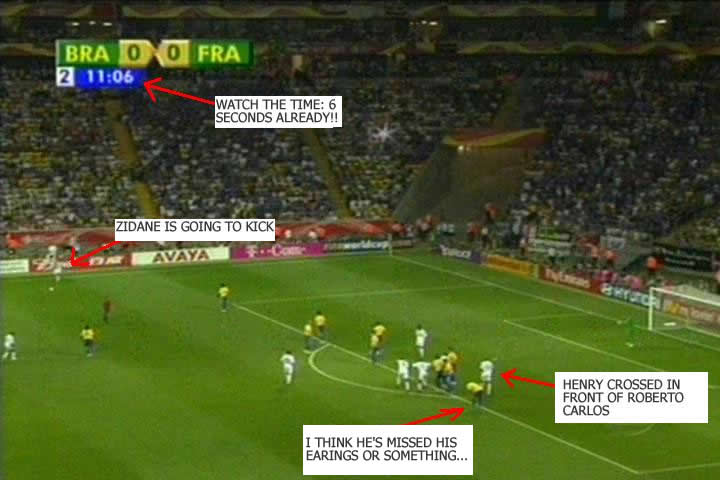
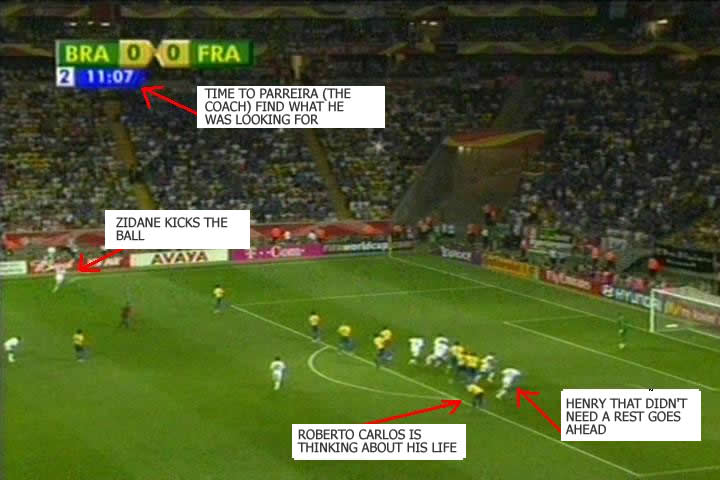
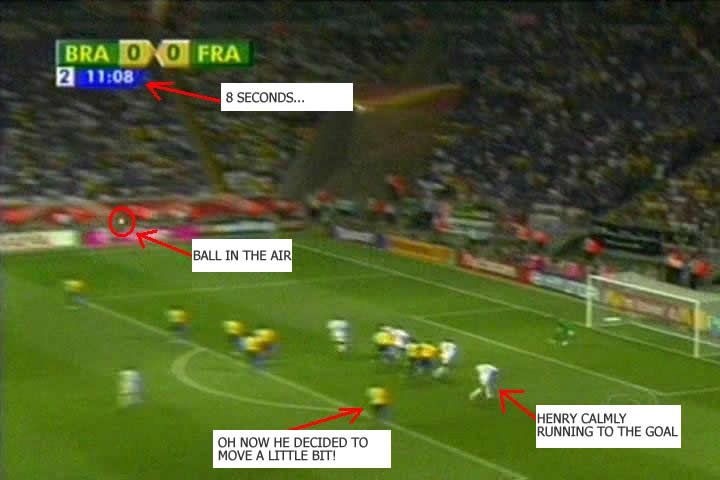
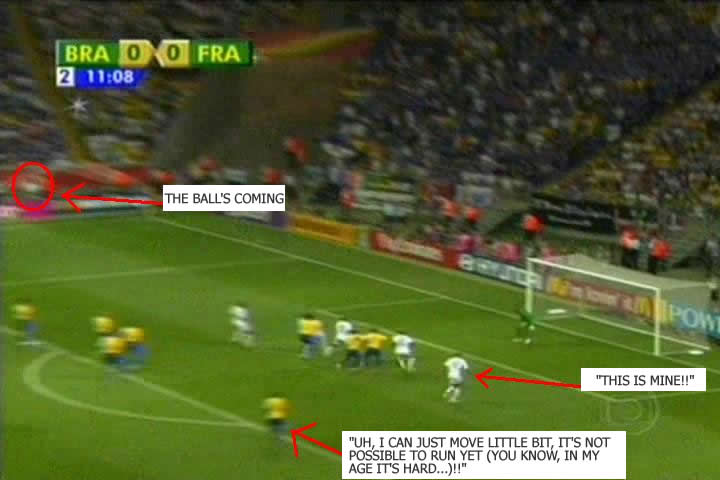
How Brazil Lost, An Analysis




Tuesday, July 04, 2006
SAMS Reference Library
Sunday, July 02, 2006
Shame on Parreira!!!
Saturday, June 24, 2006
World Cup Blog
Wednesday, June 21, 2006
New Chip Breaks Speed Record
Researchers at I.B.M. and the Georgia Institute of Technology are announced that they have broken the speed record for silicon-based chips with a semiconductor that operates 250 times faster than chips commonly used today.The achievement is a major step in the evolution of computer semiconductor technology that could eventually lead to faster networks and more powerful electronics at lower prices, said Bernard Meyerson, vice president and chief technologist in I.B.M.'s systems and technology group. He said developments like this one typically found their way into commercial products in 12 to 24 months. At 500 gigahertz, the technology is 250 times faster than chips in today's cellphones, which operate at 2 gigahertz. At room temperature, the chips operate at 350 gigahertz, far faster than other chips in commercial use today. I think it is a major breakthrough in semiconductor technology. It was really heard that silicon chips are reaching their limit and optical technology will replace them. But it seems that silicon chips will live longer than expected. The news can be read here.
Monday, June 19, 2006
Joel Spolsky writes on his first experience with Bill Gates' review
Tuesday, June 06, 2006
Nuclear Energy: Only solution to our power crisis
A miracle opportunity for Bangladesh
Source: http://www.thedailystar.net/2006/06/06/d6060601033.htm
Friday, June 02, 2006
An amazing revenge
Monday, May 15, 2006
An Open Source Scientific Library/Database in C++
3D Desktop
 Though the screenshot is beautiful, I am not much excited about this project. I have experienced sluggish behavior of Java desktop of Solaris 10. Due to this experience, I don't think this desktop environment will be as much responsive as it should be.
There are some programs in Linux which gives 3D effect to desktop using OpenGL e.g. XGL. But I did not find them impressive. They have a long way to go.
In Windows world, Windows Vista and Windows Presentation Foundation API promise to give a new look and feel of the desktop. But why should we wait so long? There is already a great implementation SphereXP. It displays icons and windows inside a sphere instead of a flat desktop hence providing 3D environment. Here is a screenshot of it:
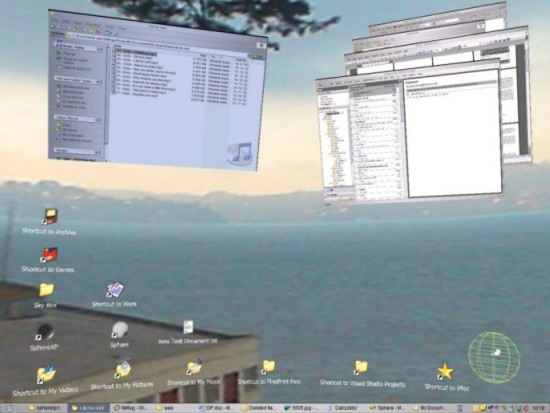
So, 3D desktop is not far away. Though our display devices are going to be 2D for quite a long time, our desktop is going to be 3D for sure. I am certain that it will bring some fantastic and rich experience to us.
Monday, May 08, 2006
The Potential and Challenges of Information Technology for the Future of Bangladesh - Sajeeb Wazed Joy
<Article>
As you may know, the Global Information Technology Report 2005-2006, sponsored by the World Economic Forum has been released. According to the report, Bangladesh is marginally improved but going backwards in terms of its ICT development. The report uses the Networked Readiness Index (NRI), covering a total of 115 economies during the year 2005, to measure the degree of preparation of a nation or community to participate in and benefit from ICT developments. The NRI is composed of three component indexes which assess:
1. The environment for ICT offered by a given country or community,
2. The readiness of the community's key stakeholders - individuals, business and governments and
3. The usage of ICT among these stakeholders.
During the year 2004, Bangladesh's NRI score was -1.30, amongst the bottom four Least Developed Countries (LDCs) with rank 100th. In 2005 the score is -1.11, amongst the bottom six LDCs with rank going downward to 110th out of 115.
India now has forty four percent of the global outsourcing market. This is projected to grow to fifty one percent by the year 2008. However, along with this growth comes a problem. Countries such as India are seeing a rise in their cost of labor which gives Bangladesh a second chance at the train we missed the first time. To compete globally Bangladesh must develop its ICT industry. We already have the human resource. What we must have urgently is sufficient bandwidth and a stable supply of power.
During the Awami League's tenure we added over fifteen hundred megawatts of power production capacity. We had projected and planned for a growth of fifteen hundred megawatts of additional power production capacity in the next five years. Since this government has taken over they have added a net of zero megawatts of power production. I'm sure you are all feeling the effects of this. This does not just affect the ICT industry, but every facet of business and development. One simply cannot develop a nation with a shortage of electricity.
The Awami League government also took the first practical steps towards ICT development in Bangladesh. To encourage investment in the software industry we allocated one hundred crore taka in our 2000-2001 budget. We eliminated all import duties on computer hardware, software and peripherals. A desktop computer used to cost three lakh taka. We brought that price down to forty thousand taka. Where there were only ten to twelve thousand computers in use nationwide, now more than fifteen thousand are purchased every month. This has directly benefited all of you. The current government has since reinstated some of those taxes that we had eliminated.
Before our tenure, no government office had a computer. Even our embassy in Washington used a typewriter for all letters to the US Government! We began the process of computerization of all government offices.
During its first term the BNP government was presented with the option of connecting the country to a submarine fiber optic cable at no cost. Unbelievably, they refused this offer. The Awami League government then initiated the current submarine fiber optic cable project. By this time it was no longer an option to connect for free. Still, the project was created but elections were upon us before we could implement it. Then the BNP government came back to power. The project was redesigned. Originally, the plan was to build a cable from Bangladesh all the way to Singapore. This was done because there was no consortium cable under construction at that time through the Bay of Bengal to which we could connect. The project was delayed after the change in government and when it was finally reinitiated, a new consortium cable was under construction. The government chose to connect to this as the cost is shared among the consortium partners. However, the cost of the submarine cable project was subsequently inflated so that now the cable that has been built has cost the same as the originally planned cable to Singapore. The original planned site of the landing station was at Shitakunda in Chittagong but it was moved to Cox's Bazaar. This was done as there was no network link between Chittagong and Cox's Bazaar and so government cronies could make a huge profit building this network link and large kickbacks were paid to Hawa Bhaban.
Under the BNP, corruption has pervaded every sector of the government. The ICT sector has not been spared. Eighteen crore taka of research and development funds have simply disappeared and hundreds of crore taka have been misspent by the ICT Ministry.
The question now is, what do we do going forward? This brief does not purport to be a policy paper for the Awami League, but I would like to present you with some of my ideas. The main purpose of this seminar is to give me an opportunity to meet with all of you who represent the ICT industry in this country and take back some of your ideas and concerns. All of this will then be incorporated into Awami League's future policies.
With regards to power production, the Awami League has an established track record of developing the nation's power infrastructure. We initiated the privatization of power production which resulted in greater efficiency, reduced corruption and rapid growth. These policies will continue and we will build the necessary power production capacity to meet the demands of the entire nation now and into the future.
I also propose to develop e-governance initiatives. Putting government information online, such as budgets and expenditure will bring about transparency and accountability. Creating a nationwide database and network for the police will increase the efficiency of the law enforcement agencies, improve law and order, prevent instances of police abuse and help us fight terrorism. Online citizen processes such as tax filings, land registration, tender and procurement and public grievances along with online payment schemes for all of these will eliminate the scope for bribery and corruption. My goal is that eventually, all citizen transactions with the government can be completed online without you having to wait in line outside multiple government offices for days and bribing everyone from the peon to the secretary to do something as mundane as filing your taxes.
Then we have the issue of bandwidth. It is not enough just to build a submarine fiber optic cable. Bandwidth must reach the entrepreneurs. This requires a massive distribution network within the country. Still, just a network is not enough either. There must be sound policies put in place to regulate the distribution of the bandwidth. The current submarine cable provides Bangladesh with a bandwidth of ten gigabits per second while the current BTTB network can transmit a maximum of two megabits per second. That is barely one millionth of the capacity of the cable. Current BTTB plans do not call for the utilization of the full bandwidth for another four years! Also, the current policies call for the submarine cable to carry only voice traffic for the foreseeable future. That means that most of your businesses will not see any benefit from this cable. Lastly, the current regulatory framework calls for completely non-transparent control over the distribution of the bandwidth. What that means is that kickbacks to Hawa Bhaban will make up the largest portion of the bandwidth pricing. Bandwidth prices will follow the same trend as the price of all essentials in this country have during this government's term and you will pay double of what the actual cost is.
What we need is to build national data backbones and implement a balanced bandwidth distribution policy. What I would like to propose is to completely revamp the existing telecommunications regulatory commission, the BTTRC, making it more independent and transparent. Along with that, I propose allowing private telecommunications companies to build the backbones. From there the distribution network and the last mile solution can be spread out competitively among telecommunications companies and local ISPs. This would free the government of the cost of building the network and allow each locality to develop the solutions most appropriate for it based on the terrain and existing infrastructure.
In the software sector, entrepreneurs must pay more attention to developing local expertise rather than just trying to re-sell foreign software. We should not become just sales offices for foreign IT shops. On the export side one of the areas that appear to need some help is our ability for project management through the whole project. We need to improve our educational institutions and IT curricula to develop this expertise. We also need to initiate computer usage and training earlier, in our schools rather than in colleges.
We also need to think about technology that can change the lives of the common people. Whether that's a new way for the farmer to pump water or alternative fuel for our cars, we need to think of technology not just in terms of telecommunications or software but as a tool to improve our daily lives. This will increase efficiency in every aspect of our lives. I believe that maximum utilization of technology is our shortcut to modernization.
The government has spent millions of dollars setting up IT parks and ICT centers in places such as Silicon Valley. This simply does not work. What we need to do, instead, is to provide the infrastructure and policies and let the private sector, all of your businesses, flourish. I propose to continue the infrastructure development and tax cuts that we had initiated during our previous term. I also propose to set up a venture fund to finance promising IT startups in Bangladesh.
If we make it, it will be because of the entrepreneurs in the private sector, not the government. Microsoft was built by a college dropout. Yahoo was built by two Stanford students in a trailer. Hewlett Packard was started in a garage. We have to find our own Bill Gates and make sure they have the tools to succeed.
Source: http://www.albd.org/compile/2006/it_joy.htm
</Article>